



Global phosphate output may look high on paper, yet many plants still feel the squeeze every month. You probably see this gap yourself: raw ore production rises, but effective and usable supply does not follow the same trend. Mining pauses, regional logistics, and rising new-energy demand all contribute to this tension. When supply tightens, every ton of phosphate ore becomes more precious, and any loss in your wet-process line directly hurts profitability. This is where equipment choices start to matter far more than usual.
During this period, many producers turn to NHD because the company has decades of experience in phosphate chemical equipment, solid–liquid separation, acid distribution systems, and EPC services. The group was founded in 1992 and operates large manufacturing plants, wide product lines, and global project footprints across more than fifty countries.NHD filtration series, agitator series, thickener series, and auxiliary equipment cover most sections of wet-process phosphoric acid lines.
Why Does Phosphate Supply Remain Tight Even at Peak Production?
Although national phosphate rock production has reached record highs in recent years, you still face irregular supply in practice. One reason is that ore quality and operating conditions vary widely by region. In China, phosphate ore grades differ in Yunnan, Guizhou, and Hunan, and flotation is necessary to obtain usable material. When local mines suspend operations for safety checks or environmental reviews, your procurement becomes unpredictable even though “total output” seems high at a national level.
Mining Disruptions and Regional Output Gaps
Output interruptions often come from short shutdowns or seasonal restrictions. These are common in areas where high-impurity ores require more complex processing. Some mines experience temporary closures during the rainy season or during government inspections. Even new mines that enter operation take time to build consistent production.
Transport and Logistics Constraints Across Provinces
Transport costs also shape your effective supply. Moving ore from inland areas to coastal chemical plants can be expensive, and cross-province logistics sometimes cause unexpected delays. A plant may face shortage even when national inventory is technically high, because freight, distance, and handling all influence whether ore arrives when you actually need it.
Rising Demand From LFP Batteries and Industrial Phosphate
LFP batteries have created a new layer of demand. The growth of lithium iron phosphate and electrolyte materials raises industrial-grade phosphate consumption each year. These materials require phosphoric acid of consistent purity, pushing more producers to compete for the same upstream ore.
What Losses Are Most Common in Wet-Process Phosphoric Acid Plants?
When ore supply becomes tight, the losses inside your line suddenly matter more. You may already try to run at higher efficiency, but specific bottlenecks persist in many plants, especially in the reaction, filtration, and acid absorption sections.
Low Solid–Liquid Separation Efficiency
If your filtration stage does not perform well, P₂O₅ escapes into the gypsum cake. This can happen when filtration area is too small, cake structure becomes uneven, or washing stages do not cover the full surface. Some operators notice that cake moisture stays high, which raises energy consumption at the evaporation stage and slows downstream processes.
High Energy Consumption During Evaporation and Slurry Handling
If filtrate contains too much water or slurry density fluctuates, your evaporation load increases. Plants that run at high altitude or process high-impurity ores often see more variation in crystal formation, requiring additional mixing or washing.
How NHD’s Rotary Table Vacuum Filter Helps You Improve Recovery Rates?
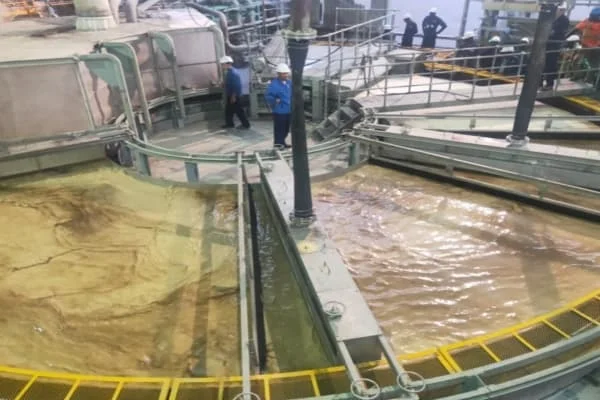
When you face the pressure of tight ore supply, the filtration stage becomes a major point of leverage. NHD’s Rotary Table Vacuum Filter for Phosphoric Acid is designed specifically for wet-process phosphoric acid lines. The group’s knowledge base describes this model in great detail. It has been applied in over 1,000 installations, with filtration areas reaching 320㎡, and design plans going even higher. The filtration area range from 8㎡ to 320㎡ covers most project sizes, including large monocline phosphate plants.
NHD’s rotary filters include features such as floating support structures, large-diameter cycloidal drives, automatic lubrication, and improved suction hoods. These details may seem trivial at first, but real plants benefit from smoother operation and reduced downtime.
Consistent Solid–Liquid Separation at Large Filtration Areas
The horizontal fan-shaped plate design offers stable rotation and even cake formation. NHD’s models such as HDZT-160 or HDZT-200 maintain consistent vacuum zones for feeding, washing, and drying. These zones prevent channeling and reduce cake cracking. A filter that holds cake shape well will also reduce gypsum scaling inside the buckets and filter cloth.
Reduced P₂O₅ Loss Through Multi-Stage Washing
The washing stages consistently cover the cake surface, allowing more soluble phosphate to be recovered before discharge. NHD’s filters are commonly used in phosphoric acid slurry concentration sections. Plants processing semi-water or dihydrate systems often report lower P₂O₅ loss after switching to multi-stage washing designs.
Lower Operating Costs Through Automatic Lubrication and Structural Optimization
Automatic lubrication reduces manual labor and extends bearing life. The improved frame and low-density grille structure reduce bridging and scaling inside the filter buckets. Fans of equipment with fewer manual issues often mention how small daily maintenance changes accumulate into noticeable savings by the end of a production season.
How NHD Supports Your Plant During Tight Supply Cycles?
Tight supply periods require not only good equipment but a reliable partner who stays involved throughout the project lifecycle. NHD offers EPC and MO services, along with a full material-testing program. The company manages engineering design, manufacturing, installation, and commissioning, which helps maintain project consistency.
Full EPC and MO Services for Phosphate and MAP Lines
NHD has extensive EPC experience in phosphate chemical plants, including phosphoric acid and MAP production lines. Their engineering lines handle installation, while logistics lines handle quality control and safety. These integrate into a single delivery path.
Tailored Process Optimization Through Material Testing
Before designing equipment, NHD requests real slurry samples from your site. The company conducts lab tests, pilot tests, and simulated startup tests with slurry on actual machines. This method reduces selection errors and aligns the equipment with your working conditions.
Global On-Site Commissioning and Rapid After-Sales Service
NHD’s after-sales team follows a “4S” service system, with regional personnel who respond to equipment failures within 24 hours. NHD’s support covers installation, commissioning, and long-term maintenance.
What Efficiency Improvements Can You Expect With NHD Equipment?
Efficiency varies by ore quality and process, but certain improvements are common across projects. Plants often see reduced moisture in gypsum, better slurry concentration, and lower suspended solids in overflow water after upgrading filters.
Higher P₂O₅ Recovery and Stable Product Quality
Stable cake formation and thorough washing improve recovery. Plants that once lost phosphate to the gypsum pile often report lower loss rates and more consistent phosphoric acid strength.
Lower Moisture in Gypsum and Reduced Evaporation Load
When filtration removes more water, evaporation demands drop. Slurry with more predictable moisture content also supports steady crystal growth and fewer operational swings.
Reduced Downtime Through Durable Materials and Automation
NHD uses corrosion-resistant stainless steel for flow-contact parts and carbon steel for external structures. Hollow shaft designs in mixers and durable seals in agitators help reduce failures. These features minimize downtime and reduce your maintenance burden.
Why NHD Is a Reliable Partner for Phosphate Producers?
The most convincing part of NHD’s story is its long track record. The company has over thirty years of work in phosphate chemical equipment, non-ferrous metallurgy, alumina, titanium dioxide, and sulfuric acid systems. Its R&D teams have developed technologies such as deep-cone thickeners, advanced demisters, and high-efficiency rotary filters.
FAQ (Pertanyaan umum)
Q1: Why is P₂O₅ loss so high in some phosphoric acid plants?
A: Loss often comes from weak filtration stages, uneven cake formation, or poor washing coverage. When cake moisture stays high, more phosphate leaves the system with gypsum.
Q2: How does the rotary table vacuum filter improve plant profitability?
A: It increases recovery through stable multi-zone filtration and reduces moisture levels, which lowers evaporation energy and improves downstream efficiency.
Q3: Is NHD suitable for large international phosphate projects?
A: Yes. The group has delivered projects across more than fifty countries and provides installation, commissioning, and after-sales services through a structured technical team.