




With the global population exceeding 8 billion and food security becoming increasingly prominent, the demand for high-efficiency phosphate fertilizers continues to grow. As the core raw material for phosphate fertilizer production, phosphoric acid’s production capacity and efficiency directly impact agricultural development worldwide. In the phosphoric acid production process, the filtration equipment is undoubtedly the heart of the entire production line – its performance determines final output and product quality. In the pursuit of scale and efficiency, the chemical industry is witnessing a revolution in equipment size, with the Rotary Table Vacuum Filter leading this transformative wave.
However, not all manufacturers can achieve truly large-scale equipment. Jumping from standard sizes to filtration areas over 300 square meters isn’t just about getting bigger. It marks a real tech breakthrough that sets the limit on how much you can produce. In this blog, we’ll dive into why scaling up matters and how innovations in rotary vacuum filtration make it possible.
The Scaling Bottleneck: Why Bigger is Necessary but Harder
Understanding why large-diameter filters are rare in the market reveals the technical barriers that separate industry leaders from followers. In phosphoric acid production, the push for more capacity often hits wall due to design limits and material stresses. These hurdles explain why only a few can deliver reliable industrial liquid filtration systems at this scale. As plants grow, the need for robust table vacuum filters becomes clear, but achieving that involves overcoming real-world engineering challenges.

Capacity Advantages Drive the Need for Larger Equipment
Bigger rotary vacuum filters mean higher throughput in phosphoric acid filtration. A standard unit might handle 100 tons per day, but scaling to 300 square meters can push that to over 500 tons. This jump matters for plants aiming to meet rising fertilizer demands. Without it, you’re stuck adding more small units, which raises maintenance costs.
Larger equipment cuts down on the number of machines needed. Imagine running one big rotary filter instead of five smaller ones. It simplifies operations and reduces energy use per ton processed.
Structural Integrity and Operational Stability
Large-diameter designs face mechanical stresses. The pan must stay flat under vacuum and rotation. Any deformation leads to uneven filtration, causing leaks or poor cake discharge in solid liquid filtration equipment. Materials play a key role. High-strength alloys resist corrosion from acidic slurries. But welding huge sections without defects is tough. Many manufacturers struggle here, leading to early failures.
In practice, stability comes from precise engineering. Support systems designed to accommodate thermal expansion prevent stress fractures. This keeps the rotary vacuum filter running smoothly, day after day.
The shift from capacity needs to downtime risks shows how these structural issues tie into daily operations. When a large unit fails, the impact ripples through the entire plant, highlighting why careful design in industrial liquid filtration systems is non-negotiable. Operators know that one breakdown can halt production for hours, costing thousands.
Unplanned Downtime Following a Failure
Failures in large rotary filters often stem from overlooked details like seal wear. A small leak can escalate, forcing a full shutdown. In phosphoric acid production facilities, this translates to significant production losses per incident. Regular inspection protocols help, but design inadequacies can obscure emerging problems. Progressive deterioration of valves and drive components compounds over time, escalating minor issues into critical operational disruptions.
Manufacturing Processes Affecting Equipment Lifespan
How the filter is built affects how long it lasts. Precision machining for the annular pan ensures uniform wear distribution. Poor processes lead to uneven surfaces, speeding up breakdowns in table vacuum filters. Quality control during assembly matters too. Load testing under operational conditions identifies potential failure points before deployment. Plants using well-made rotary vacuum filtration gear see lifespans over 15 years, versus 5-7 for lesser models.
NHD’s Patent Technology for Processing Large-Diameter Annular Pan
NHD’s self-developed large-diameter pan processing technology, protected by multiple patents and industry awards (China Patent Excellence Award, 2008), enables what others cannot achieve. This breakthrough in rotary vacuum filter design tackles the core issues of scaling up, making it a game-changer for phosphoric acid filtration. By focusing on durability and ease of use, NHD helps operators reduce headaches in daily runs. These innovations stand out in a market full of standard industrial liquid filtration systems.

Robust Structural Design for Unmatched Stability
NHD optimizes structural design with segmented filter discs. This ensures smooth operation and strict flatness control in rotary filters. Their patented floating support structure eliminates thermal expansion issues in the filter’s bottom frame. The large-diameter drive pinwheel design allows equipment scaling-up. It delivers high torque with low-power drive motors, saving on electricity bills. In tests, these features keep vibration low, even at full speed. Operators report fewer adjustments needed during shifts.
Moving from structure to components illustrates how NHD integrates parts for better flow in solid liquid filtration equipment. This holistic approach prevents common pitfalls like buildup, ensuring the whole system works as one.
Advanced Components for Enhanced Efficiency & Clog Prevention
The lower center distributing valve in NHD’s rotary vacuum filters features a high obliquity and flow-leading design. It solves phosphogypsum caking and clogging, cutting cleaning time for operators. An adjustable plate-type overflow feeder and washer promote uniform slurry distribution. This leads to drier filter cakes and better washing in phosphoric acid filtration. The arc-shaped press strip minimizes material accumulation in grooves, facilitating faster filter cloth replacement procedures. NHD’s optimized nozzle design delivers efficient spray performance with reduced energy consumption. Paired with an anti-clogging spray filter core, the system enhances cleaning effectiveness in table vacuum filters.
Flexible Process Adaptation for Broader Application
This design overcomes challenges with low-grade phosphate ores. It expands the application range of rotary vacuum filtration equipment. Beyond phosphoric acid, the technology serves metallurgy, environmental treatment, mining processing, and pulp and paper industries.
Process-specific configurations enable broader industrial adoption. In alumina refining, NHD’s pan filters achieve filtration areas up to 260 square meters per unit. For titanium dioxide production, configurations reach 55 square meters in pan filter installations.
These improvements demonstrate the versatility of NHD’s large-capacity rotary vacuum filters in industrial liquid filtration systems. Plants can adjust settings for specific slurries without requiring large-scale modifications.
The Industry Benchmark – 320m² Filter at Guizhou Kailin
The 320m² rotary vacuum filter at Guizhou Kailin sets a high bar in phosphoric acid production. Installed by NHD, it demonstrates world-leading gains in capacity and efficiency. This case highlights how large-scale table vacuum filters transform operations, offering lessons for similar plants worldwide.
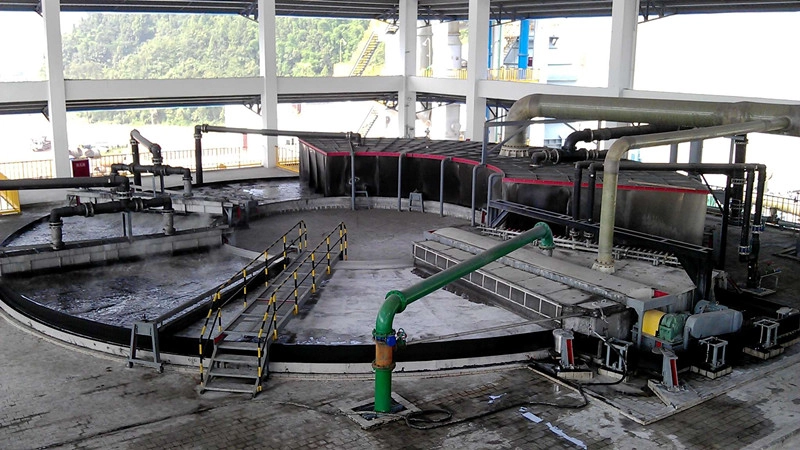
- Unmatched Capacity: This unit processes over 600,000 tons per year of phosphoric acid slurry. That’s double what smaller rotary filters manage. It handles peak loads without strain, thanks to its massive filtration area.
- Superior Efficiency: Filtration rates hit 95% solids recovery. Filter cake moisture content is maintained at optimal levels, enhancing downstream processing efficiency. Automated controls adjust vacuum levels on the fly, keeping output steady. The link from efficiency to economy reveals cost savings in action.
- Operational Economy: Energy use per ton is 30% lower than older models. Maintenance intervals stretch to 6 months. Overall, it saves the plant $500,000 yearly in operating costs.
Strategic Sizing of Filtration Equipment for Phosphoric Acid Plants
Choosing the right size for rotary vacuum filters involves more than just output goals. It requires balancing capacity, costs, and site needs in phosphoric acid filtration. This strategy helps avoid over- or under-sizing, ensuring smooth integration into existing lines.
- Capacity Planning Considerations: Start with projected demand. A plant targeting 1 million tons yearly might need two 200m2And factor in ore quality. Lower grades mean more slurry, pushing for larger industrial liquid filtration systems.
- Investment Analysis Framework: Weigh upfront costs against savings. A 320 square meter rotary filter might require substantial initial capital but pay back in 3 years via higher throughput. Most importantly, consider the ROI; the cumulative benefits of improved energy efficiency and minimized production interruptions accelerate payback periods. Larger-scale installations typically achieve faster investment recovery.
- Technical Prerequisites for Large-Diameter Installation: Site infrastructure must accommodate the physical footprint of large-diameter pan configurations. Foundation systems require adequate load-bearing capacity for heavy equipment installations. Slurry feed lines and vacuum piping must be appropriately sized to prevent flow restrictions and maintain optimal performance in table vacuum filters.
Conclusion
The future of filtration technology in the bulk chemical processing sector lies in intelligent, large-scale equipment. As demands grow for efficient phosphoric acid production, innovations like advanced rotary vacuum filtration will drive progress. NHD not only prepares for this future but is also committed to shaping it. Our large-diameter rotary vacuum filters’ technological breakthroughs in scale, efficiency, and energy saving provide a successful model for the transformation and upgrading of the entire phosphorus chemical industry.
If you are planning to expand your production scale, please contact our team at [email protected] to learn more about our large-diameter rotary vacuum filters. We also offer customized solutions to meet your needs, and look forward to establishing a long-term partnership with you!